
What a Fool Believes
Believing versus understanding, flights of angels, and a rabbit hole of nineties nostalgia

Thanks so much to everyone for reading. I appreciate the time you spend here and am especially thankful to all subscribers for supporting this work. I have been recovering from surgery and so that is why I took a break from posting here. Good to be back, and I appreciate you all. Happy Saturday. xSuzie
Years ago, my friend A had health issues. While she was clear on what she needed to feel good in her body again, the doctors kept trying to talk her out of her chosen path. She was too young to make that decision. Maybe she didn’t really know what she wanted. Just wait a little longer, they said. Meanwhile, her symptoms were ongoing and debilitating.
One day, I went with her to the doctor. Even though she told me how bad it was, I was still shocked to see the dismissiveness firsthand. I had believed my friend, of course. But being there, observing the doctor’s arrogance, I realized I hadn’t understood, not completely, just how painful this whole experience had been.
I have felt like this at other times. A dear friend told me for years that her sister’s mental illness wreaked havoc on the whole family. Did I believe her? Absolutely. But after spending an evening with the sister, who needs way more help than she’s getting, I felt like I owed my friend infinite apologies. All those years of hearing insane stories, and I really didn’t get it, not completely.
After the doctor’s visit, A and I went for a burger in midtown. The place was empty. She was exhausted.
The food was good, though. As we were eating, the waitress sailed through the dining room, belting out a song at the top of her lungs, like the entire establishment was her personal stage. It was over the top, how much she was genuinely feeling this song, which happened to be “Iris” by the Goo Goo Dolls. I felt uncomfortable, like our presence was an intrusion. This song meant something to this young woman. I just want you to know who I am.
A and I looked at her, and then each other. A said, “Alrighty, then,” and we laughed.
That song resurfaced in a wave of social media posts this March. A TV show about JFK, Jr. and Carolyn Bessette Kennedy revved up the nineties nostalgia. It was nice to see the Internet agree on something, even something that means nothing (JFK, Jr. was a very fine-looking man) and then a large segment of Internet agreed on something else—the memefication of that decade, with the “What were you like in the 90s?” posts flooding social media.
Recovering from surgery with time on my hands, I started wondering how it was decided that the accompanying song on every one of those posts needed to be “Iris” by the Goo Goo dolls. Why that song? Who makes that decision?
That song brought me back to that afternoon in midtown. I asked A if she remembered that moment and she didn’t. We laughed just the same.
*
“Iris” was on the soundtrack for a Nicolas Cage movie, City of Angels, about an angel who gives up immortality to be with the woman he loves. During recovery, I considered watching the movie, but when I realized it was a remake of Wings of Desire, I thought better of it.
Turns out, Johnny Rzeznik, the guy who wrote “Iris” didn’t really like the Nic Cage version but he had agreed to write something for the soundtrack so he could one day “tell [his kids] their old man was once on a record with Bono and Peter Gabriel.”
By Rzenik’s telling, the song came relatively easily. He wrote it in a hotel room, where he had been staying while going through a divorce. Four hours later, the song was finished.
The process of songwriting has always intrigued me. How a painter paints, a dancer dances, or an actor acts—I can wrap my head around all of that. But to put a song together? It’s a mystery.
I tried once. In my early twenties, I took voice lessons, and the teacher asked me to write a song as part of my homework. I worked hard, marrying off-key notes to bad lyrics. When I sang it for her, she wrinkled her nose and said, “That’s more like…an expression.”
I told my friend E, who is a songwriter about my psychic jukebox, the songs that play in my head when I wake up in the morning. This has been going on for a good fifteen years. When I mentioned my admiration for songwriters, he told me he thought I maybe had that kind of ability, given those early morning songs in my head. Sadly, that is not the case.
E and I went to see Fleetwood Mac at the Garden, the tour that brought Christine McVie back. She sang “Songbird,” which apparently came to her out of nowhere at midnight. I read somewhere that this is the only time that happened to her; the song came fully formed, and she got out of bed and stayed up all night so she wouldn’t lose it.
Michael Jackson reportedly had that happen all the time, feeling an urgency to capture songs that came through him, sometimes burning the midnight oil, including right before he died. If he didn’t, he used to say, “God will give them to Prince.”
This idea that songs come down from on high made it into my dreamworld a few years back, despite my complete lack of musical talent. I woke up from a dream about a children’s book, where angels came and whispered songs in normal people’s ears and voila! They picked up instruments and that’s how we get the music we know and love. I thought this idea was very deep until I had coffee. Oh. Not at all profound. Maybe just obvious.
While “Iris” may or may not have been delivered by angels (my two cents…it was), it is from the perspective of an angel; Rzeznik put himself in that angels shoes and out came a song about love, devotion, what it would take to “give up forever.”
About the heavens we create, right here on Earth.
*
In 2019, I confided in a loved one about something that had been weighing on my heart, mind, and spirit for far too long. The response was positive: “I believe you” is the first thing this loved one said. On the interpersonal level, I received it like a warm, fuzzy hug.
On a broader level, though, something about that response lingered. Like, wait—why is that even on the table? Why wouldn’t I be believed? I mean, we all know why in terms of the society we live in, e.g. this week’s news of an online rape academy, where men share tips on how to drug and rape their partners and which had 62 million visitors in February alone. “Believing women” is not convenient if you’re trying to pull off that kind of depravity. And apparently, a lot of men are.
Manipulators, liars, and predators love debating “belief” because it’s an easy way to hide misdeeds. Just your garden-variety obfuscation. I’ve been called a liar by the very people who know, quite well, I’m not lying. Which is why they only call me that behind my back.
I spent some time being upset about this but thankfully, in the grand scheme, not too much time. Sometimes, I have random thoughts, though. The other day, in meditating on belief versus understanding, I thought of this situation and felt sad for all of us.
When we keep the conversation on the surface—to believe or not believe—we don’t have to go to the deep down. We don’t have to understand the actual carnage or just how much grief lives on the bottom floor.
*
In July 1999, the day after John F. Kennedy, Jr.’s Piper Saratoga disappeared off the waters of Aquinnah, I was working a day bartending shift on Martha’s Vineyard in Oak Bluffs. Usually, the lunch shift was relatively quiet, unless there was rain, in which case, patrons drank a lot of mudslides. But that day, all the seats at the bar were taken, most heads fixed on the television.
The reaction to news of JFK Jr.’s disappearing plane struck me as a strange type of oxygen; people needed to know what happened, even though we all knew the passengers—the first Son, his wife and his sister-in-law—were dead. How could this happen? This family is cursed. I hope they find them soon. The real-time fixation on this tragedy was unlike anything I’d ever seen. I was 23 at the time.
One middle-aged white woman was downing white wine and saying she couldn’t look at the news. At first, I was so busy that she registered as a blurred figure, kind of like the like the face of William Kennedy, Jr.’s alleged rape victim in his televised 1991 trial, which I watched in high school (and never for a second doubted his victim’s story). But at some point during the rush, that changed, and the entire rest of the place became fuzzy. “This is just like when his father was shot,” she said, her hand covering her mouth.
“I had to come. I was in Boston, and I just had to come,” she said.
The Vineyard is no quick trip from Boston. That’s serious, I thought, looking at the crowded bar, wondering how many there are here who also traveled from great distances to experience, second-hand, a piece of this trauma. These were pre-Internet days. Pre-9/11, when online tribute sites—a new phenomenon then—popped up and people could pour their grief into a virtual world. Pre-Casey Anthony trial, where hordes of people traveled to pay homage to Casey Anthony’s murdered daughter during her mother’s trial.
What drives a person to drink from the well of someone else’s tragedy? I wondered. I had some guesses. Maybe this is a way to experience old feelings that she never processed, possibly from a trauma she couldn’t face, possibly related to something that not even she wanted to believe.
*
Not long after, the remains of JFK, Jr., his wife and sister-in-law were buried at sea, off the coast of the island. To me, this would have been a simple news story, had I not been flying in a small three-seat plane that day and had the pilot not needed to maneuver around restricted airspace. The family didn’t want news stations flying helicopters over their memorial, capturing footage of their sacred event. I didn’t know what would happen if a pilot made a mistake but I imagined it wouldn’t be good.
Flying in small planes from the Vineyard to Boston was part of my weekly routine. I was preparing to return to college after an abrupt, unplanned two-year hiatus. Now I was going back and facing the reason I left in the first place; I had been sexually assaulted twice in a six-month period by two different young men who coincidently shared the same name. The thought of returning made me physically sick, yet I was determined. I needed therapy, badly.
Before the planes, I was riding my bike along seventeen miles of country roads to the hour-long ferry. From the mainland, I would catch a two-hour bus to Boston and then a thirty-five minute subway ride to my therapist’s office.
When I told him I might have to come less frequently or even cancel my appointments altogether, he said, “What about Angel Flights?”
Angel Flights is a volunteer pilot service, where pilots pick up and drop off medical patients to make their lives easier, to make treatment possible, when critical care is out of their geographic reach. The flights are free. My therapist knew about Angel Flights from another patient of his who lived in Nantucket. “You think I qualify for free weekly flights because I need therapy?” I asked, skeptical.
“Well, Suzie, I think this is a question of self-worth. Why don’t you think you’re worthy of these flights?” he asked.
“It’s just therapy,” I told him.
“But you just said you needed this,” he countered.
At the time, Angel Flights was word of mouth. It took a bike ride to the airport and then a few more phone calls before I got the number of a guy who could help me. I hesitated, though, when I did some research and found images online of children on crutches, adults with bandages over their heads, the blind.
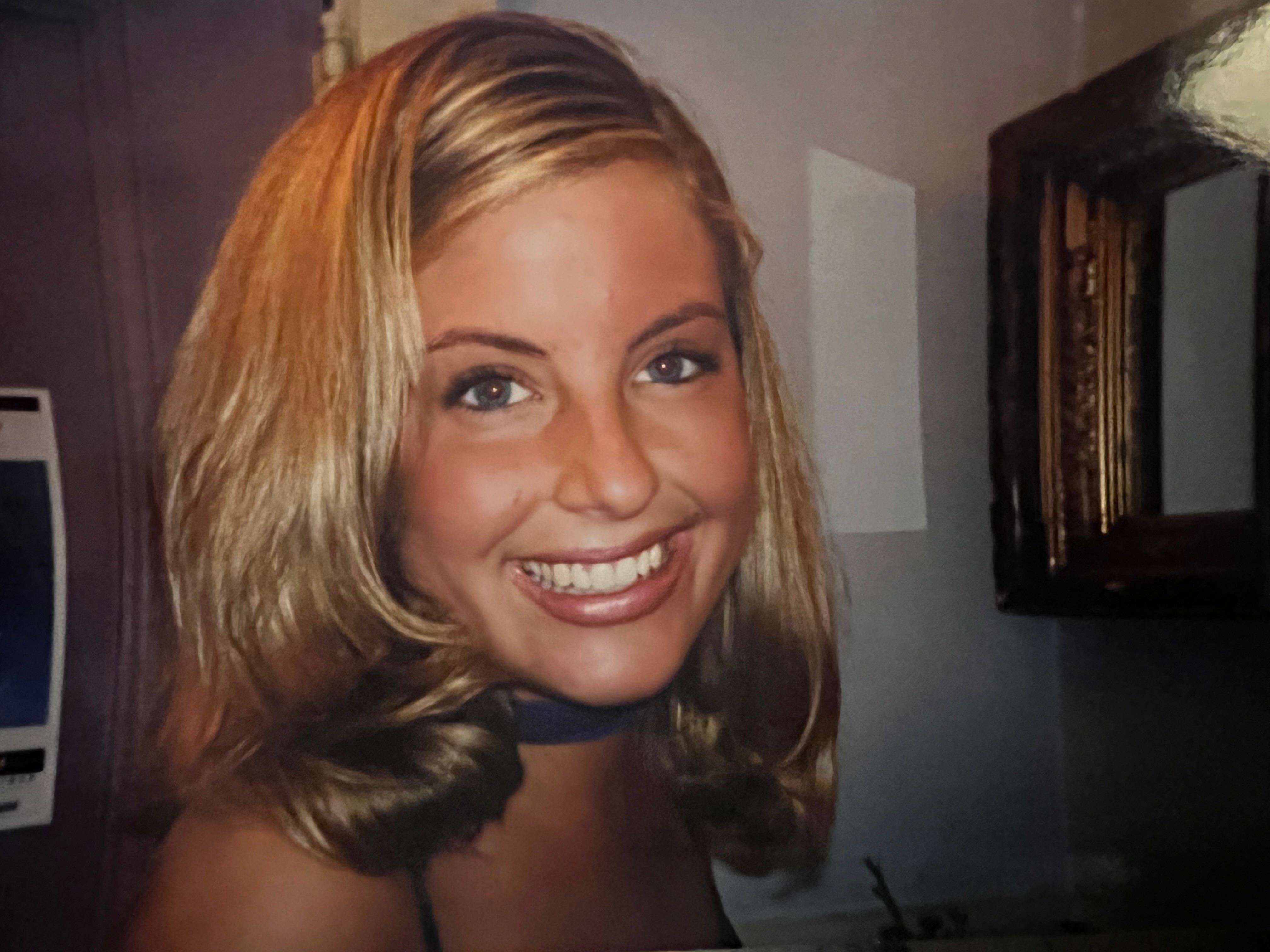
“Look at me,” I said when I went to therapy the next week, gesturing to my extra weight, which I owed to the summer of many mudslides. My skin was berry brown, and my highlighted hair was even blonder from all the hours I’d spent in the ocean. No one would believe I was in need of medical appointments. “I feel like I belong in a Corona commercial, not on a medical flight.”
“Just call them,” he said. “We’ll work on your feelings of worthiness in the sessions.”
I did, in fact, need therapy. The pain was worse than I was willing to admit to my therapist, even to myself. So, I made the call. It was so easy.
I came to love this service. The rotating cast of volunteer pilots seemed, as my therapist assured me, happy for a reason to fly. Whenever I walked onto the tarmac, all gave me the same second glance, but few asked about my reason for needing the flights. When an older pilot in madras shorts said, “I sure hope they’re fixing you up OK,” I told him I was going to see a therapist. His face lit up, “Oh, we have lots of those in my neighborhood!” Then he told me about chickens he and he wife recently acquired.
The whole ritual felt very soothing. After takeoff, the views of the distant shoreline, a summery scene, marked by ocean and more ocean, always put me in a serene mood, even when I was going to therapy to dissect unexamined pain of degradation and a darkness I struggled to name.
After JFK, Jr. and the Bessettes died, the pilots had plenty to say. On the day of their funeral, the pilot who picked me up said, “This should never have happened. You can’t fly in New England without an instrument license. It’s just so tragic.” I heard some version of this over and over, how their deaths were preventable.
Though I was not afraid to fly, the thought of getting into a tiny aircraft while someone was being buried below after crashing in his tiny aircraft gave me pause, especially knowing that airspace was restricted.
On the way home, a woman with a cherry red plane picked me up. Her friend handed me a teddy bear with a sweater she knit. “Thought you might need some comfort.”
I started to cry, feeling split open by her genuine kindness.
My tears stopped, though, when the pilot pulled out a map and said, “Gee, Logan is just so big. Which way are we going again?”
Who could forget about the subtext of the day? I thought again of the funeral for someone who died while flying a three-seater, much like the one we’re in now.
Overwhelmed, I fell asleep immediately, a trauma response. When I was a kid, I was known for falling off my chair or falling asleep in my mashed potatoes. Anywhere but here.
When I woke up on the plane minutes later, the plane was shaking, and I could see only clouds. We were in bad turbulence. We lost contact with air traffic control, right after being alerted to a nearby plane with a vomiting kid on board. I’d been on enough of these flights now to know that the way out of turbulence is to ascend. But without knowing the whereabouts of the other plane, we couldn’t do that.
This fright only lasted a moment, but it was one moment too long.
A small part of me still didn’t believe my trauma merited Angel Flights, but on the descent, I held on to that teddy bear with all my might. In the comfort I received from that cute little stuffed animal, there was relief and understanding, sorely needed understanding.
*
Two months ago, I had my last official appointment for the chemo trial I’d been enrolled in since September. Without going into the laundry list of ways that I have been poked, prodded, operated on, radiated, and jacked up with harsh chemicals, I had already been through plenty prior to this last appointment. Someone said to me when I was talking about this whole process, “We all have our silent battles,” and even though I recognized it just your average mindless comment (I make them, too), it made me realize that there was nothing “silent” about what I had experienced.
So yes, even though the treatment had taken over my whole life—a fact that I was well aware of, especially as the physical aspect grew more and more difficult—I still found myself on that last day standing in the hospital cafeteria and seeing the name of the hospital across the back of a wheel chair and thinking, Wait–I’m in a cancer hospital? How did that happen?
This was a case of disbelief, with a simultaneous and complete understanding of what I had gone through. At least on the physical and day-to-day level. I think it’ll take a while before I have an existential kind of understanding of this health journey, but through all of it, I was very present to every ache, pain, worry, complaint, disappointment, frustration, joy, gratitude.
On the two-hour drive home, I normally listened to audio books but this day, I needed to zone out to music, so I blasted the Fifth Dimension and sang at the top of my lungs.
This week, I met a woman, a fellow breast cancer survivor, who explained that receiving this diagnosis felt like the universe grabbing her by the shoulders to wake her up. She said it more eloquently than this, but on the general point, I agree.
Wake up, wake up, we’ve miles to go.
*
Back in 1999, we didn’t have the Internet to distract us or randomly whoosh us into territories previously unknown. For the lady who came into the Oak Bluffs bar and drank a lot of wine because JFK’s son died tragically, there was no Reddit forum for her to pour her grief into. No Facebook post where she could share her feelings and then think about the responses, what others said, what others think of her pain, what others understood of her life, how others’ might also identify, or at least see parts of themselves. In theory at least, it was an easier time, a simpler time, to go within.
That summer, I did my best to heal those old wounds, though I barely scratched the surface. It would take another fifteen years before I could write about it and three after that until that essay was published. Little did I know that essay would be the spark that lit the flame that burned the whole house down and led to events that created a ripple effect, which included me being called a liar.
Believing myself was never the problem. I mean, yes, there were times I tried to do some mental gymnastics and talk myself out of what I sensed, felt, observed, experienced, and knew—but that wasn’t a belief problem. It was an understanding problem. Of course, I couldn’t fully take in all the tentacles at once. I would have spontaneously combusted.
One story is connected to another story, and before we know it, the whole ball of yarn unfurls.
*
Right before I went back to school in 1999, my housemates and I had an end of the summer party on Martha’s Vineyard. Still nervous about school, I had no idea how much I would wind up loving and appreciating school after taking time off. Or how the fun I had at school would also carry a layer of meaning, and maybe relief.
Many friends came from off island to celebrate. One group rode their motorcycles from Boston to our house. We pitched tents in the yard and made chili and cornbread.
The forecast was rain, rain, and more rain. This was supposed to be a bad thing but we planned on having fun, no matter what, and that plan came to be, beautifully.
At night, we told stories, drank beer, and listened to music. Many of these folks I’d met in a venue that played live music several nights a week. Some were musicians, others, like me, just music appreciators.
Though I didn’t tell anyone why I needed therapy, I talked about the flights, the teddy bears, and all the confusion with how healthy I looked on the outside. I played up the Corona commercial line, hoping to distract from my obvious fault lines.
Another friend told a story about the time she was dumped by her ex on her birthday. He was there, too, at our party, laughing along at how he’d wished her a drunken happy birthday before speeding off in a car with someone else. Turning old pain into deep laughter, that’s an art form. The belly laughs went on and on.
One woman, a friend of a friend, lost her partner when he had a heart attack while performing on stage overseas six weeks earlier. I didn’t know her well, but I was amazed by her ability to be present, despite her earth-shattering loss. I remember how interested she was in others, the excellent questions she asked. She and I talked about philosophy, which was also her major. In the back of my mind, I wondered, How is she doing this? I didn’t ask. It was none of my business.
Though scared for the challenge ahead, I enjoyed the hell out of that weekend. We all did. On the last day, there was a downpour. We didn’t want to go into town because the restaurants and movie theaters would be packed. Someone suggested we go to the beach.
Next thing I knew, there were motorcycles revving in the driveway. I caught a ride on the back of one, and we all went to Lucy Vincent Beach, where we skipped down the path to the water. Before us, a gorgeous stretch of sand, the mid-sized waves crashing to shore, and a hard, relentless rain, coming down like tears from the sky.
The cleansing rain had a manic effect, and with no time to think, we stripped down to nothing and raced into the water, diving into one of the most beautiful days I can remember.
This was so good to read. When I do meditations about favorite moments, it’s swimming in the rain in the ocean in the Bahamas the summer of 2005. And it truly is a healing art when pain eventually becomes laughter. As I read this I kept thinking I really want to listen to Iris…I hadn’t heard it all the ways through for years. Hours later I got in my car, put Spotify on shuffle and guess which song played first?!